At 3 a.m., the large screen in a command center suddenly flickered—of the 16 monitoring signals, 3 showed screen tearing, and 2 had delays exceeding 2 seconds. By the time the operator urgently switched to the backup system, the typhoon warning information had already missed the optimal response window. This is not a fictional scenario, but a real predicament faced by most traditional video wall controllers in the ultra-high-definition era. BITVISUS's newly launched 8K60 video wall controller was designed precisely to solve these problems.
8K60 Video Wall Controller - 4-input 16-output Ultra-High-Definition Splicing Solution
8K60 Video Wall Controller - 4-input 16-output Ultra-High-Definition Splicing Solution
01、When the command center meets 8K: A revolution in vision and efficiency
Does your command center also face these pain points?
Multiple signal sources clashing: Image stuttering occurs when 4K cameras, GIS maps, and conferencing systems are connected simultaneously.
Ultra-HD bottleneck: Even after upgrading to an 8K display, the controller output remains at 1080P.
Splicing limitations: Supports a maximum of 4x4 layout, insufficient for large command centers.
Latency disaster: Signal transmission latency exceeds 50ms in mission-critical scenarios.
02、8K60 Video Wall Controller: Redefining the Ultra-High-Definition Display Standard
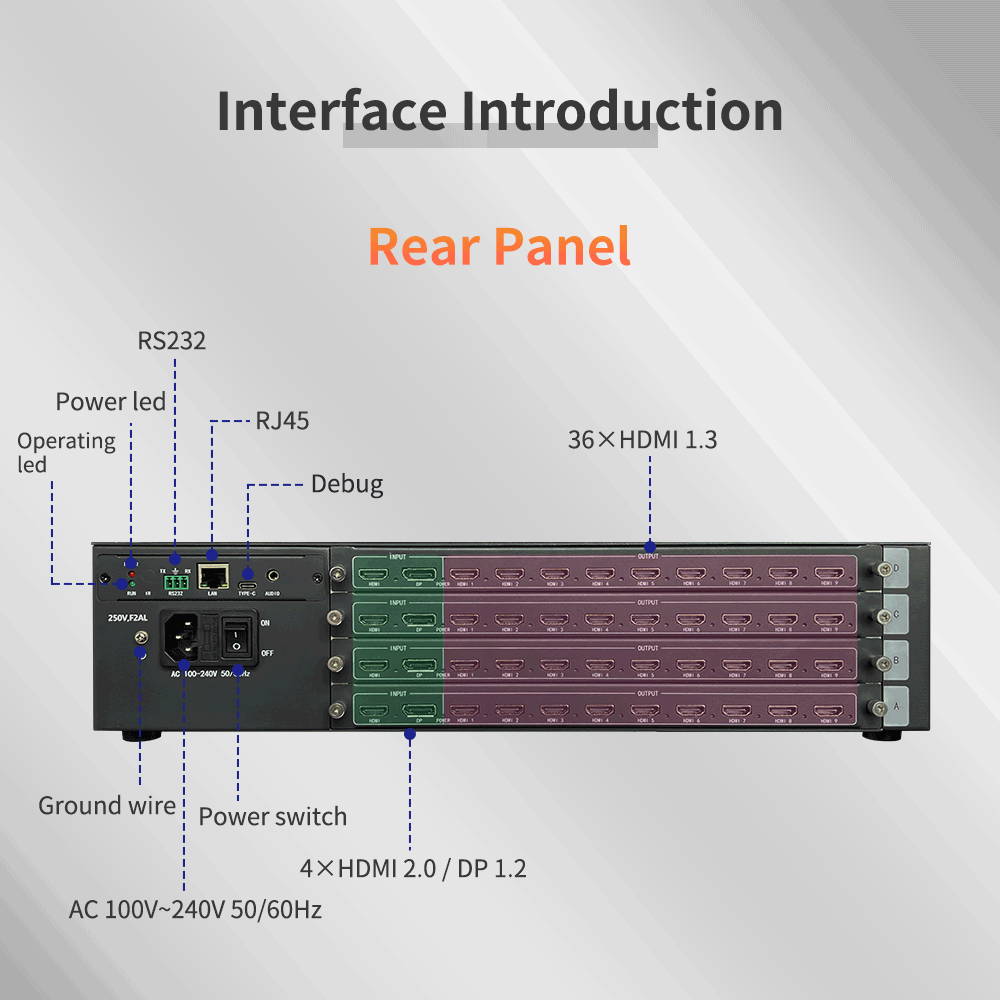
The BITVISUS BIT-VWC-U2-4368K60 video wall controller, with its powerful 4-input, 16-output configuration and 6x6 flexible splicing capability, is key to solving the aforementioned challenges. Its core advantages stem from three major technological breakthroughs:
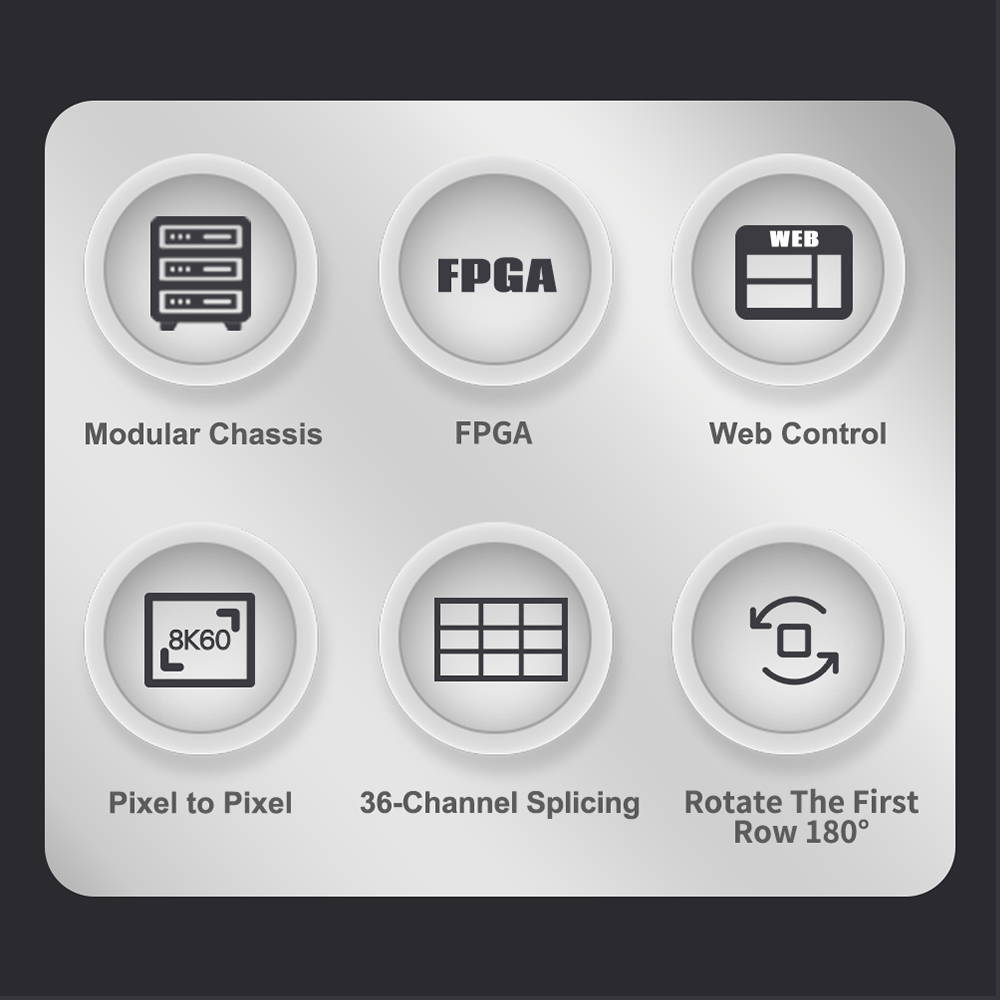
1. 8K Ultra HD + FPGA Full Hardware Architecture: The Secret to Zero-Latency Processing
· 7680×4320 Resolution: Single-screen output is 1920×1080P60, achieving an 8K-level visual experience after splicing, with four times the detail clarity of 4K.
· 28nm FPGA Chip: Full hardware real-time processing, input-to-output latency <40ms, eliminating the stuttering issues of traditional CPU architectures.
· 16 Synchronous Outputs: Each HDMI interface is independently driven, supporting arbitrary splicing combinations (horizontal/vertical/irregular shapes).
2. 6x6 splicing + 180° rotation: Breaking physical display boundaries
· Seamless splicing of 36 screens: Supports any layout from 1x2 to 6x6, a single device can drive 36 1080P displays
· 180° rotation of the first row: Solves the problem of inverted images when installing vertical screens, especially suitable for vertical screen arrays in transportation hubs
· Custom resolution: Supports unconventional resolutions such as 17280×4320 (4×9) and 11520×6480 (6×6).
3. Multi-protocol compatibility + low power consumption design: Stable operation around the clock
· HDMI 2.0/DP 2.0 dual input: Compatible with various signal sources such as computers, NVRs, and satellite maps
· 80W ultra-low power consumption: Fanless silent design, suitable for 24/7 uninterrupted operation in command centers
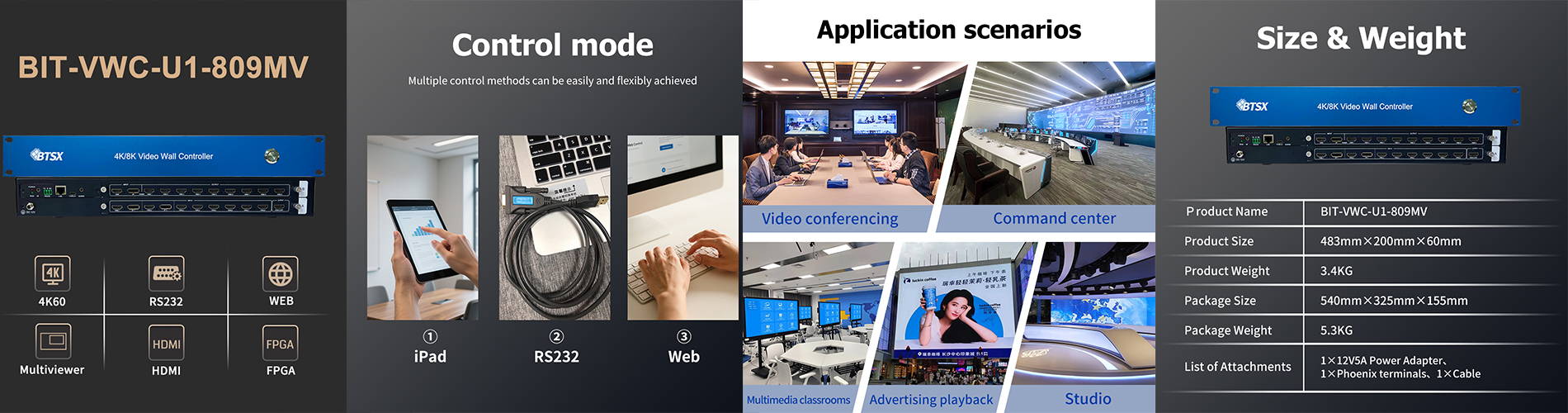
· Triple control methods: Infrared remote control + RS232 serial port + Web backend, satisfying different operating habits
03、Industry application scenarios of 8K60 video wall controller
Command and Control Centers
In command centers for public security, transportation, and emergency management, the 8K60 6x6 video wall controller integrates multiple information sources onto a unified platform. Key indicators such as traffic flow and road efficiency are transformed into heat maps and dynamic curves in real time through data visualization technology, providing intuitive data support for command personnel. This not only helps decision-makers scientifically formulate traffic control strategies but also effectively ensures the efficient and smooth operation of urban transportation networks.
Smart Manufacturing and Industrial Monitoring
In smart manufacturing scenarios, video surveillance systems track the real-time operating status of production lines and the working conditions of core equipment, promptly identifying potential faults and production anomalies. By displaying multi-process monitoring footage alongside a production data visualization interface, managers can comprehensively grasp production progress, rationally allocate resources, and effectively improve production efficiency and product qualification rates.
Energy Facility Monitoring
In the chemical and energy industry, video surveillance is responsible for 24/7 safety monitoring of key facilities such as power plants and oil and gas pipelines. Combined with data visualization technology, it enables in-depth analysis of energy production, transmission, and consumption data. 8K ultra-high-definition display makes remote inspection a reality, while multi-signal integration capabilities enable the simultaneous presentation of security monitoring and operational data, helping enterprises optimize power generation scheduling and reduce operating costs.
Large Conference and Presentation Environments
In boardrooms, large conference centers, and other similar settings, this controller supports the simultaneous display of presentation content, real-time data, and remote participant feeds, creating an immersive communication experience. Its preset one-click large-screen solution activation function makes switching between different meeting scenarios simpler and faster.
04、0How to choose a suitable video wall controller
When selecting a video wall controller, current needs and future development trends must be comprehensively considered:
Signal Source Type and Quantity: A comprehensive assessment of existing and potential future signal source types (e.g., HDMI, DisplayPort, SDI) and their maximum quantity is necessary to ensure the controller has sufficient interface redundancy.
Display Wall Size and Resolution: Match the controller's output capabilities to the physical dimensions and total resolution requirements of the video wall to ensure perfect compatibility with the display devices.
Operational Experience Requirements: Consider the usage scenario and user habits to select a suitable control method, such as a wireless touchscreen, physical control panel, or software interface.
System Integration Capabilities: Confirm whether the controller provides an API interface for seamless integration with existing control management systems (e.g., KVM).
Budget and Overall Cost: In addition to the initial investment, a comprehensive assessment of long-term operating costs is required, including energy consumption, maintenance, and future upgrade expenses.
Request a Solution? Or Product Problem?
Please fill out the quick form and we will be in touch with lightning speed.